
Seasoned bureaucrat and a stickler for rules Finance Secretary Tuhin Kanta Pandey will be at the helm of capital market regulator, Securities and Exchange Board of India (SEBI), for three years. The 1987-batch Odisha-cadre Indian Administrative Service (IAS) officer, Pandey, would replace Madhabi Puri Buch, whose three-year term ends on Friday.
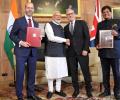
'That way you're not hostage just to US sort of exports to India.'
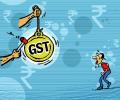
Over 100,000 small and medium-sized businesses are non-compliant with e-invoicing norms under the goods and services tax (GST) regime, a mandatory requirement for businesses with an annual turnover of over Rs 5 crore. E-invoicing provides real-time access to invoices that are prepared by the supplier on the purchase of goods, allowing faster accessibility to input tax credit, thereby limiting the manipulation of fake credit as it has to be generated before the transaction. "The default has been reported mainly in businesses with a turnover between Rs 5 crore and Rs 20 crore," a senior official informed
There remains a debate on who said this: "When the facts change, I change my mind. What do you do, Sir?" Was it the British economist John Maynard Keynes or the American economist Paul Samuelson. Irrespective of who said it, this sentiment appears to have found resonance in ITC's boardroom in recent years.

'The launch of Nila, our very first satellite was very emotional as well as nerve wracking. We tried to calm ourselves by cracking some poor jokes!'

An hour-long disruption could affect around 40 million UPI transactions.

'The dakiyas will be our partners, receiving credit proposals from micro-enterprises at the grassroots level.'

India's e-commerce market alone is projected to reach $200 billion by 2026, making it a prime industry for ambitious entrepreneurs, explains rediffGURU Harsh Bharwani.

'The quality of justice is directly linked to the quality of judges -- if that suffers, justice delivery suffers.'
From the Sensex pack, Bajaj Finserv, Mahindra & Mahindra, Axis Bank, Bajaj Finance, Adani Ports, ICICI Bank, Zomato and UltraTech Cement were among the biggest gainers. However, ITC, Nestle, State Bank of India, Reliance Industries, Asian Paints and Tata Consultancy Services were among the laggards.

Finance, ICICI Bank, Mahindra &h Mahindra, Kotak Mahindra Bank and Titan were among the gainers. Bharti Airtel, Adani Ports, Tech Mahindra, Reliance Industries, Axis Bank, Larsen & Toubro were the laggards.

As RBI governor, Sanjay Malhotra will have to give the highest priority to the interest of the economy while deciding on the growth-inflation trade off at Mint Street.
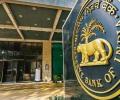
The Reserve Bank of India (RBI) has barred four non-banking finance companies (NBFCs), including two microfinance institutions (MFIs), from sanctioning and disbursing loans for charging exorbitant interest rates to the borrowers. These four entities are Asirvad Microfinance, Arohan Financial Services (also an MFI), DMI Finance, which provides personal, consumption, and micro, small and medium enterprises loans, and Flipkart co-founder Sachin Bansal's Navi Finserv, which offers home and personal loans. The ban will take effect on October 21 to "facilitate closure of transactions in the pipeline", the regulator said in a statement.

President Droupadi Murmu's address to the nation on the eve of the 79th Independence Day.

Nearly a dozen firms have shown interest in building the foundation model and LLMs, while others have proposed sector-specific SLMs.

The need for a manufacturing policy, reining in food inflation and raising investment in the country were among key suggestions given by economists who met Finance Minister Nirmala Sitharaman and senior ministry officials in the first round of pre-Budget consultations on Friday.

Metropolitan Stock Exchange of India (MSE) plans to raise Rs 120 crore from investors in an attempt to stay afloat. The beleaguered exchange's board has approved issuance of 1.19 billion equity shares of face value Rs 1 at a premium of Rs 1 through private placements, according to a disclosure on its website.

Ayan Pramanik reports on former Infosys CFO V Balakrishnan's fintech firm, which aims to make borrowing easy for small firms and individuals.

M&M was the biggest gainer on the Sensex chart, rising 5.97 per cent, followed by JSW Steel, Ultra Cement, Kotak Bank, ITC and NTPC. Reliance Industries gained 0.73 per cent to close at Rs 2,871 apiece. In contrast, TCS, HCL Tech, HUL, Nestle Industries, Bajaj Finserv, Wipro and Infosys were among the losers.

'With India's growing capabilities in the space sector, this creates promising opportunities for enhanced collaboration and market access.'

Among the 30-share Sensex pack, State Bank of India, Reliance Industries, Hindustan Unilever, NTPC, Larsen & Toubro, Nestle India, Power Grid, ITC, JSW Steel and Sun Pharmaceuticals were the major gainers. On the other hand, HDFC Bank, Titan, Mahindra & Mahindra, IndusInd Bank, UltraTech Cement, Tata Motors, HCL Technologies and Asian Paints were among the laggards.

Brokerages expect a further slowdown in Indian firms' revenue and earnings growth in Q4FY25, following low single-digit growth in the preceding three quarters, as factors like weak consumer demand and credit growth linger on.

'It is our duty to keep space sustainable and free of debris.'

Benchmark Sensex closed above the 85,000 level for the first time while Nifty scaled the 26,000 peak at close on Wednesday as fag-end buying in banking and power shares helped stock markets recoup early losses. After a see-saw trade during the day, the 30-share BSE Sensex rose by 255.83 points or 0.30 per cent to settle at an all-time high of 85,169.87. During the day, it surged 333.38 points or 0.39 per cent to hit a record intra-day peak of 85,247.42.

From the 30-share pack, Adani Port, Bharti Airtel, Asian Paints, IndusInd Bank, Bajaj Finserv, Reliance Industries, Infosys, UltraTech Cement, HDFC Bank, HCL Technologies and ICICI Bank were among the laggards. Tata Motors, Axis Bank, Maruti, Larsen & Toubro, ITC and Tata Steel were among the gainers.

In 2024, the Securities and Exchange Board of India (Sebi) implemented significant reforms, focusing on cooling down the derivatives segment, enhancing transparency and accountability in small and midsised enterprise (SME) listings, and deepening the fund management ecosystem.

Trump's sweeping tariffs and penalties on China-built ships have turned global shipping into the front line of economic war, observes Shyam G Menon.
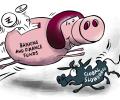
Companies in the banking, finance sector and insurance (BFSI) sector have underperformed on the bourses despite leading the earnings growth charts in the post-pandemic period. This has created a dichotomy between their earnings and share prices. BFSI companies have never been less expensive than the rest of the equity market.

'Reduce your equity allocation, put that allocation into gold and fixed income.'

Among Sensex firms, HDFC Bank climbed more than 2 per cent. TCS, Maruti, Infosys, Reliance Industries and Bharti Airtel were among the major gainers. State Bank of India, JSW Steel, ITC, Tata Motors, UltraTech Cement and Nestle were among the laggards.

The US Trade Representative noted that India's average applied tariff rate stood at 17% per cent, the highest of any major world economy.

From the Sensex firms, Power Grid, NTPC, Tech Mahindra, Bharti Airtel, Tata Motors, IndusInd Bank, Reliance Industries, Kotak Mahindra Bank and Maruti were among the laggards. Asian Paints, Wipro, JSW Steel, Hindustan Unilever, Bajaj Finserv and Mahindra & Mahindra were among the biggest gainers.

The number of cyberfraud cases has skyrocketed from 2,677 in 1999-2000 to 29,082 in FY24 -- more than a 10-fold increase. The RBI pegs digital payment frauds at Rs 1,457 crore in FY24, up more than five times in a year. It's not just the number of frauds. What's alarming is the growing sophistication of the fraudsters, exposing the vulnerabilities within the financial system, observes Tamal Bandyopadhyay.

To me he always symbolised the sincere, confident, face of a Bharat whose rise is unstoppable. Ratan Tata was a Rishi who was unquestioningly trusted by people who never saw him and never met him, asserts Tarun Vijay, the former BJP MP.

'80% of start ups fail because they don't have a support system to help them in the very early phase.' 'It's not just an idea that takes an entrepreneur through the initial three years of journey.' 'What plays a definitive role in making a start-up successful is idea+team+capital+mentors+access to a larger ecosystem.'

'The long-term impact of elections is minimal.'

'Healthcare is not an industry.' 'The government is only encouraging insurance as they are not able to provide healthcare to people.' 'Opening new medical colleges is not what is needed.' 'You have to invest in public sector hospitals.' 'You cannot hand over healthcare to the private industry.'

Stocks of small- and mid-cap companies continued to gain ground in July, notwithstanding analysts sounding caution on these two market segments given the sharp run thus far in calendar year 2023 (CY23). Sanjeev Prasad, co-head of Kotak Institutional Equities, in a note co-authored with Anindya Bhowmik and Sunita Baldawa in June-end, had cautioned against the sharp run in small- and mid-caps. "We do not see any particular reason for the excitement in small- and mid-cap stocks.

'Many do not have robust business models, and their prospects of survival and long-term growth are poor.'

The market capitalisation of listed companies on the NSE surpassed $5 trillion (Rs 416.57 trillion) on Thursday on a day when the Nifty 50 index touched an all-time high of 22,993.60. The Nifty 500 index also touched an all-time high of 21,505.25 on Thursday indicating that growth in the equity market is not restricted to only the large capitalised stocks, a statement by NSE said.
